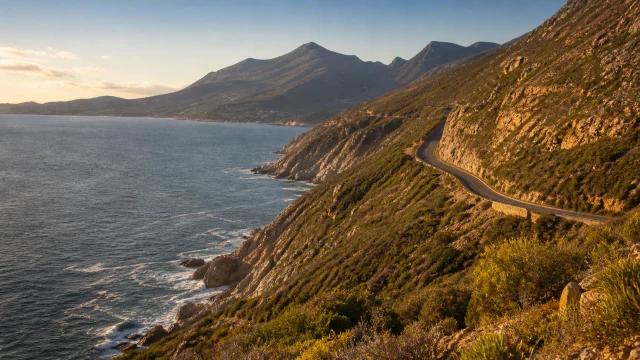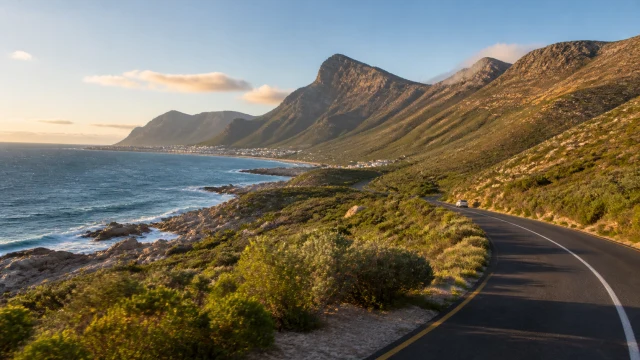
The Cape Winelands are often introduced through wine, but the first impression is usually the landscape: vineyards arranged beneath rugged mountains, avenues of old trees, white-gabled buildings and towns made for wandering. Tasting is part of the day, not the whole of it.
For a first visit, the real choice is not simply which estates to collect. It is how to balance Stellenbosch and Franschhoek, how much time to leave for lunch, and whether you prefer heritage, food, scenery or a more structured tasting journey. A measured itinerary reveals far more than a race between cellar doors.
Where are the Cape Winelands?
The best-known wine valleys lie inland from Cape Town, with Stellenbosch and Franschhoek forming two natural anchors for a day trip. They are close enough to combine when the route is planned thoughtfully, yet distinct enough to reward separate visits. Paarl and other surrounding areas add further possibilities, but including every name on a first day can dilute the experience.
The journey out of the city moves from urban Cape Town into agricultural landscapes and mountain valleys. Traffic and road conditions vary, so avoid building your day around precise transfer promises. Think instead in chapters: a considered morning visit, time in one of the towns, a good lunch and a contrasting afternoon stop.
Stellenbosch
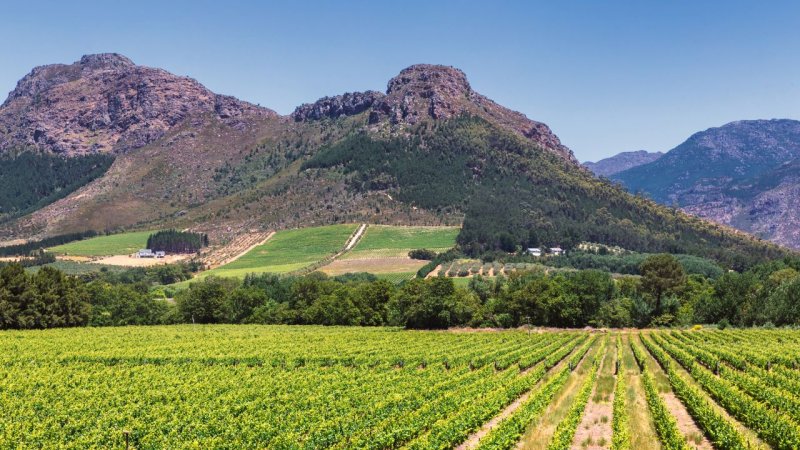
Stellenbosch combines a historic town centre with a wide spread of estates in the surrounding countryside. Oak-lined streets, Cape Dutch architecture, galleries, cafés and restaurants give the town an identity beyond wine tourism. It is a place where even a short walk between buildings helps explain the region’s layered history.
The surrounding wine routes offer broad variety: large established properties, intimate producers, contemporary tasting rooms, gardens and restaurants. For a first-time visitor, that range is both an advantage and a planning challenge. Choose estates for contrast rather than reputation alone — perhaps one with a strong landscape or architectural focus and another where the tasting style or food pairing genuinely interests you.
It is worth remembering that the attractive historic streets represent only part of Stellenbosch’s story. The area is a living university town and agricultural economy, not an open-air set. A good guide can add context and help visitors look beyond photogenic façades.
Franschhoek
Franschhoek sits in a compact valley framed by mountains. Its village centre, restaurants and nearby estates create a polished, leisurely atmosphere. Food plays a prominent role here, making the valley particularly appealing to travellers who want a long lunch or a day built around culinary experiences as much as tasting.
The setting feels more concentrated than Stellenbosch, though the estates themselves still require transport or a service such as the Wine Tram. Boutique shops and galleries make the central village pleasant to explore between activities. The surrounding slopes and changing light are a reminder to look up from the tasting table.
Stellenbosch or Franschhoek?
Choose Stellenbosch for
- a wider variety of estate styles;
- historic streets and a lively town atmosphere;
- a day with heritage and architectural interest;
- the flexibility to build many different route combinations.
Choose Franschhoek for
- a compact, boutique village feel;
- a strong culinary focus;
- dramatic valley scenery;
- a leisurely day that can work well with the Wine Tram.
Visiting both can work well when you keep the estate list short. A morning in Stellenbosch followed by lunch and an afternoon in Franschhoek creates natural contrast. If you prefer depth, give one area the full day and leave the other as a reason to return.
Wine tasting for first-time visitors
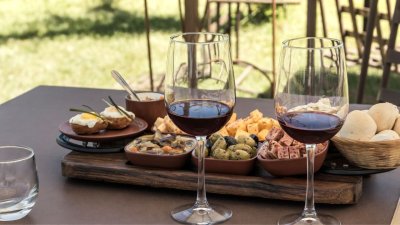
You do not need specialist knowledge to enjoy a tasting. Staff will usually guide the sequence and explain the wines; asking simple questions about varieties, place and production often opens a more interesting conversation than trying to perform expertise. Taste attentively, but feel no obligation to finish every pour.
Pacing matters. Two or three unhurried estate visits usually leave more vivid memories than a crowded schedule. Drink water throughout the day, eat properly, and use the spittoons provided if you want to taste without consuming each serving. Anyone driving should avoid drinking alcohol. A guided tour or designated driver removes that responsibility and lets the group travel together safely.
Leave time to walk through a garden, notice the architecture, speak with your host and appreciate the view. These details are often what distinguish one visit from the next.
Wine, food and scenery
A Winelands lunch deserves protected space in the itinerary. Estate restaurants and valley venues range from informal plates to longer dining experiences, and availability can be seasonal. Reserve in advance when a particular restaurant matters, then avoid placing another time-sensitive stop immediately after it.
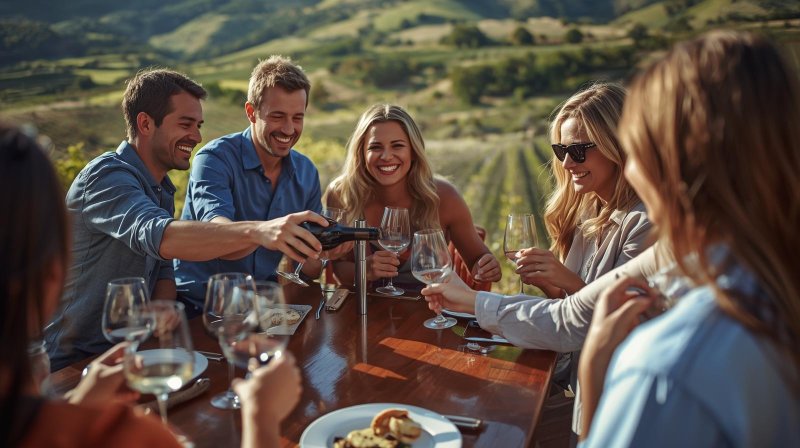
Non-drinkers can still have a rich day. Many properties offer gardens, restaurants, art, architecture, views or alternative beverages, although the exact options change. Confirm current arrangements directly where a specific experience is essential. The aim is to enjoy the region as a cultural and agricultural landscape, not to treat wine as the only reason to be there.
Franschhoek Wine Tram
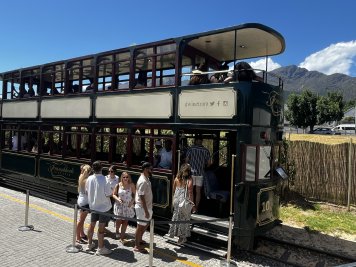
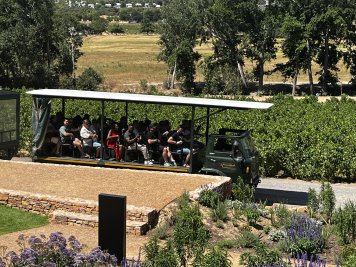
The Franschhoek Wine Tram offers a structured way to move between selected stops in the valley using a combination of tram and transfer vehicles. It creates a sociable, hop-on-hop-off style of day and is well suited to travellers who like choosing from an established route rather than designing every transfer themselves.
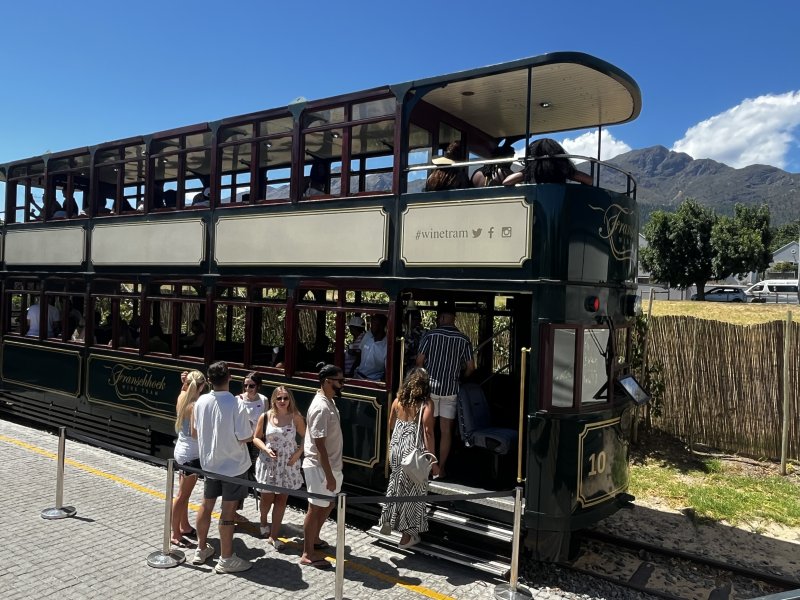
Routes, participating estates, schedules and availability can change, so consult current information when booking. Outreach Africa offers a dedicated Franschhoek Wine Tram experience for travellers who want the tram to anchor the day without having to manage the Cape Town transfers themselves.
Private tour vs independent travel
Independent travel can be ideal when you know exactly where you want to go, plan to avoid alcohol or have a designated driver, and enjoy handling reservations and navigation. It gives you control, but the estates are spread across a large area and a route that looks simple on a map can involve more backtracking than expected.
A private guide can plan an efficient route, provide context and adapt the day when lunch runs long or a group wants more time at one estate. Crucially, nobody in the travelling party needs to drive after tastings. The best private itinerary is not necessarily the one with most stops; it is the one that matches the group’s interests and energy.
When should you visit?
The Winelands change character through the year. Warmer periods can bring bright vineyard landscapes and busy outdoor spaces; cooler months offer a quieter, greener mood and meals beside a fire. Harvest activity adds energy at certain times, while winter weather may alter plans. No season guarantees a particular atmosphere, and individual estates may operate differently across the year.
Your preferred pace matters more than chasing a supposedly perfect month. Book key restaurants and special experiences ahead during popular travel periods, and keep some flexibility for weather. A beautiful estate interior and a considered tasting can be just as memorable on a cool day as a terrace in sunshine.
Planning your Cape Winelands day
A balanced example could begin with one morning estate and a short walk through Stellenbosch. Continue to a scenic lunch, then spend the afternoon in Franschhoek with one additional estate or time in the village. Return to Cape Town without trying to squeeze in a final tasting simply because there is space on a list.
This is a framework, not a fixed itinerary. Travellers interested in architecture might stay longer in Stellenbosch; food-focused guests could make lunch the centrepiece; others may prefer the Stellenbosch and Franschhoek Tram combination. Share dietary needs, mobility considerations and wine preferences when planning so the route reflects the people actually taking it.
Explore the Winelands your way
The Cape Winelands are generous to first-time visitors because enjoyment does not depend on expertise. Arrive curious, travel responsibly and leave room for one place to surprise you. Outreach Africa’s private Cape Winelands tour is designed around that more personal pace, while the custom-trip enquiry is the right starting point when food, culture or a particular valley matters more than a standard route.